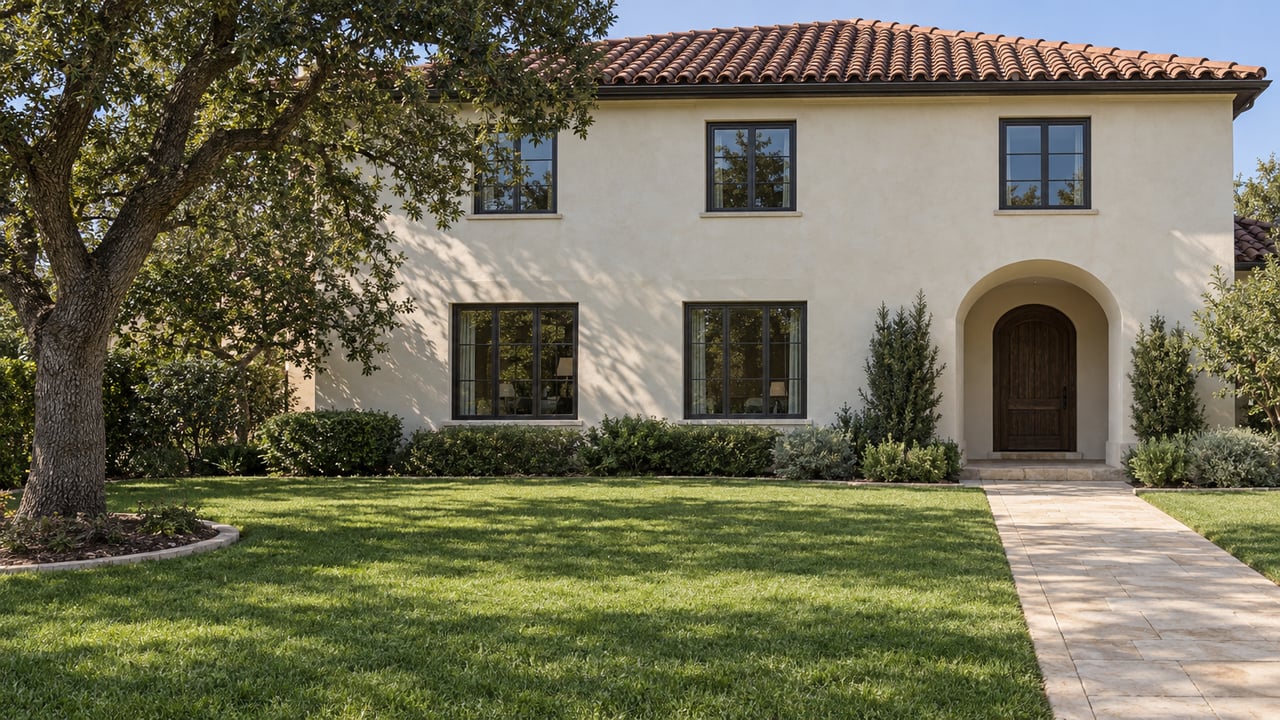
A buyer checking La Verne's citywide numbers this summer would find a market that looks almost sleepy. Zillow's smoothed home value index put the city at $940,085 as of July 2026, up a modest 0.2% over the year. Movoto's July figures showed the median list price at $1.02 million, with price per square foot actually down 5% from a year earlier. Nothing there suggests urgency in either direction.
Pull up a listing in North La Verne, or one in the Foothill Corridor, or a condo near Old Town, and the story stops matching. Each of those pockets is moving at its own speed, in its own direction, and none of them look much like the citywide average. That gap between the smoothed number and the neighborhood reality is the part worth understanding before you write an offer or set a list price.
The Same City, Four Different Answers
The clearest way to see the split is to line up what each submarket reported at different points in 2026.
| Area | Window | Median | Change YoY |
|---|---|---|---|
| La Verne, houses only | Q1 2026 | $925,000 | No significant change |
| La Verne, condos only | Q1 2026 | $475,000 | Down 31.1% |
| North La Verne | Single month | $1.27M | Down 10.7% |
| North La Verne | 3 months ending June | $1.3M | Down 2.0% |
| Northwest La Verne | Single month | $1.09M | Down 2.2% |
| Northwest La Verne | 3 months ending June | $1.1M | Down 9.2% |
| Foothill Corridor | August 2026 | $837K | Down 2% |
Two things jump out. First, the single-family stock in La Verne barely moved in the first quarter of 2026, while condos in the same city fell more than 30%. Second, North La Verne and Northwest La Verne each produced a milder number and a sharper number depending on whether you measured a single month or smoothed across a quarter. Both submarkets are softening. The exact size of the softening depends entirely on which window someone hands you.
That volatility is the tell. When a market is genuinely stable, a single month and a three-month average land close together. When they diverge this much, it usually means too few transactions are closing to produce a number you can lean on.
Where the Percentage Points Actually Come From
That thin-volume problem shows up directly in the countywide sales data. In the first quarter of 2026, La Verne recorded a citywide median sale price up 12.4% year over year, a number that on its own would suggest a market heating up fast. But that same period saw only 46 closed transactions, a 20.7% drop in volume from the year before. And when the data is split by property type, the picture changes again: houses alone showed no significant year-over-year movement, while the all-property median got pulled around by which specific homes happened to close.
This is the mechanic worth remembering any time a citywide median swings hard in a market this size. La Verne has roughly 12,000 housing units total. A quarter with 46 sales is not a statistically deep pool. If a run of $1.5 million foothill customs closes in the same three months as a cluster of $400,000 condos, the median will jump around based on that mix alone, independent of whether any individual home gained or lost value. The percentage is real. What it measures is less straightforward than it looks.
The Line at Foothill Boulevard
Underneath the volatility, La Verne genuinely does split into two different products, and the road that divides them is Foothill Boulevard itself.
North of Foothill sits the custom-lot foothill product: larger parcels, later construction, more gated frontage, and direct proximity to Marshall Canyon Regional Park, Marshall Canyon Golf Course, and Sierra La Verne Country Club. Live Oak Canyon in particular carries an oak canopy that residents describe as distinct even within the broader foothill belt. These are the homes most exposed to the softening shown in the North and Northwest La Verne numbers above, and they're also the ones where an appraiser will spend real time on view, slope, and gating adjustments rather than treating the home as a standard tract comp.
South and west of that line sits Old Town and the flatland around the University of La Verne, older housing stock, walkable streets, and a mix of Craftsman-era homes and smaller footprints closer to the $475,000 condo figure than the $1.3 million foothill median. An appraiser working this side of the divide is usually less concerned with lot slope and more concerned with age-related components: roof, panel, plumbing supply lines, foundation. Different product, different underwriting conversation, different comp set entirely.
Treating La Verne as one market means averaging two different buyer conversations into a single number that describes neither.
The Anniversary the Comps Haven't Caught Up To
There's one more variable sitting underneath all of this, and its timing matters right now. The La Verne/Fairplex Gold Line station began passenger service on September 19, 2025, putting a Metro A Line stop between the University of La Verne and the Pomona Fairplex, with a 300 space park and ride and a roughly 32 minute ride to Pasadena. As of this month, the station is closing in on its first full year of operation.
That anniversary is not just a scheduling footnote. Appraisers and buyers both lean on recent comparable sales, typically the last three to six months of closings in a given pocket. A station that opened less than a year ago simply hasn't generated enough post-opening transaction history for that transit access to show up cleanly in the comps yet. The next few months of closings around Old Town and the University corridor are the first batch where a full year of "what it's actually like to live near this station" will be baked into a seller's asking price and a buyer's willingness to pay for it. If that walkable, transit-adjacent flatland starts pulling away from the rest of La Verne's price trend, this is roughly when it would start becoming visible in the data rather than staying anecdotal.
What This Means Before You Write an Offer
None of this changes the mechanics of writing an offer or setting a list price so much as it changes what data you should be asking for before you do either.
- Ask for closings from the specific development or block, not the citywide median, and ask how many transactions that figure is actually built on.
- If you're buying north of Foothill, budget extra time in your appraisal contingency for view, gating, and slope adjustments.
- If you're buying in Old Town or near the University, expect the appraiser's attention to land on age-related systems rather than lot characteristics.
- If a listing has sat well past the current median days on market without a price change, ask why before assuming it's simply overpriced.
- If you're weighing a flatland property against a foothill one, factor in that one of them now sits inside a widening one-year window of Gold Line ridership history and the other doesn't.
A citywide number is a starting point for a conversation, not a substitute for one. Whether you're comparing a foothill custom against a flatland bungalow, or trying to figure out why two homes with similar square footage cleared escrow at very different prices, the answer tends to live in the block-level closings rather than the headline.
If you're weighing La Verne against a home somewhere else in the foothill corridor, or trying to make sense of what a specific pocket of this city is actually doing right now, Shannon Brady Realty can pull the recent closings for your exact street and walk through what they mean before you write anything down. Start with a free instant home valuation and get a number built on your block, not the whole city.
This article is general information, not legal, tax or financial advice. Consult a qualified professional about your situation.