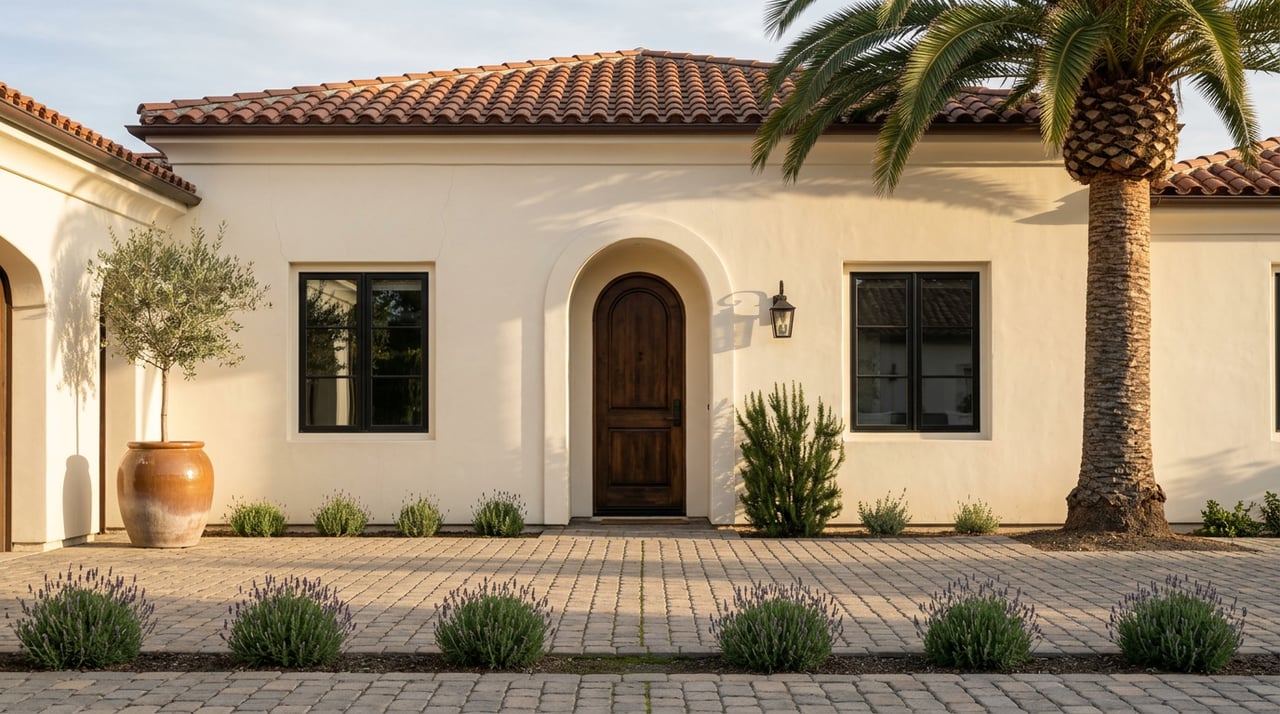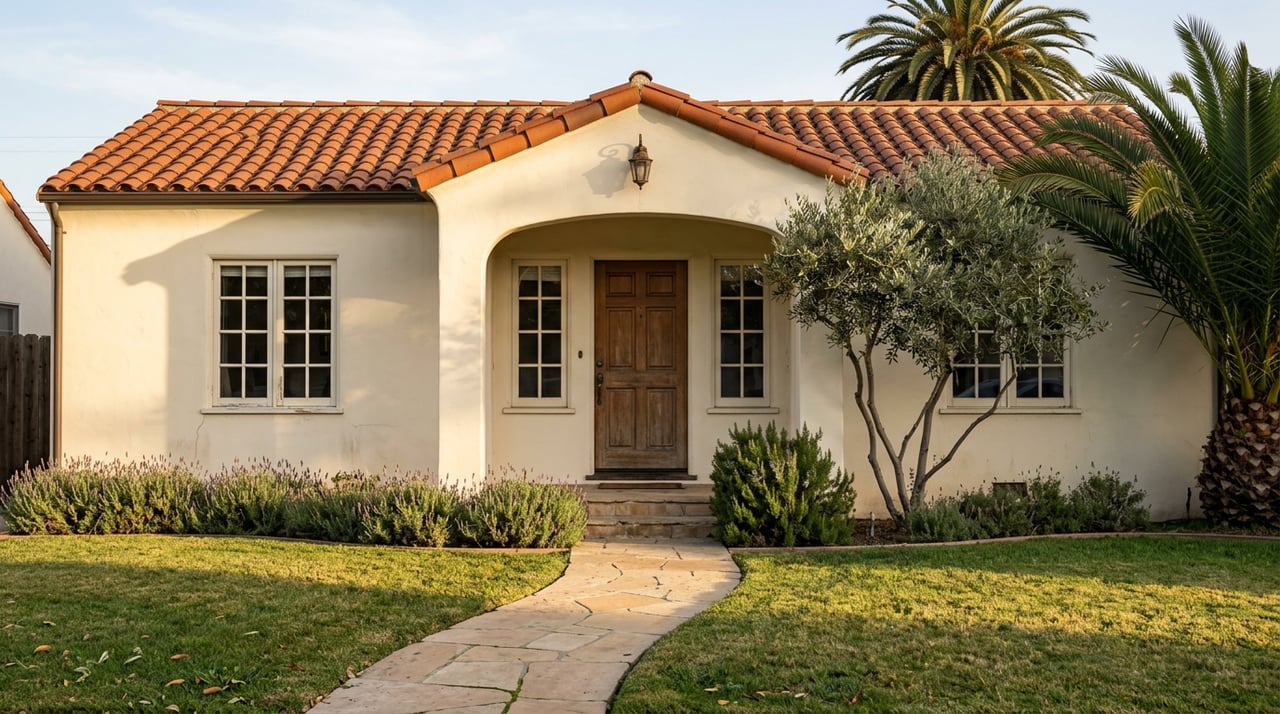
Two Glendora listings hit the MLS in the same week last spring. Both were three-bedroom houses within a ten-minute walk of the new Metro A Line station at Vermont and Ada. Both were priced in the $900,000s. One buyer will spend the next decade watching the block behind them stay exactly as it is. The other may look up in five years and see a four-story wrap building across the alley.
The difference between those two futures isn't price, condition, or school assignment. It's whether the parcel sits inside a 142-acre ring that the Glendora City Council quietly adopted in the summer of 2025.
The ring the portals don't show
Every home-search site will tell you when the A Line reached Glendora. Passenger service started September 19, 2025, with roughly 22-minute rides to Pasadena and 52 minutes to Union Station. What the portals don't render on the map is the Glendora Station Area Vision Plan, a policy document the council adopted alongside the station opening.
The plan covers a roughly half-mile radius around the station, 142 acres and 400 parcels in total. The study area picks up segments of Foothill Boulevard, Glendora Avenue, and Pennsylvania Avenue, and it envisions nearly 1,300 new homes inside that ring. That's more than half of the city's regional housing obligation, concentrated on the parcels closest to a single station.
The critical detail for a buyer: the plan is adopted, but the underlying zoning hasn't caught up. Building any of that new density requires a separate rezoning process the city has telegraphed will run through 2026, tied to a broader General Plan amendment already flagged in Glendora's 2024–2025 Economic Action Plan.
What the plan actually allows
The Vision Plan doesn't propose one uniform envelope. It sorts the ring into subdistricts, with the tallest forms placed closest to the tracks and shorter forms stepping down toward the Village.
- Six-story building forms are contemplated on parcels adjacent to the Metro tracks.
- Three-story forms are discussed at the intersection of Bennett and Glendora.
- A Glendora Avenue Gateway subdistrict supports hospital-related expansion around Emanate Health, encouraging parcel consolidation into a unified campus.
- Feasible residential typologies identified in the plan appendices include townhomes, garden apartments, and four-story wrap structures.
The four-story wrap isn't a hypothetical. Avalon Glendora, at Glendora Avenue and Route 66, sits just outside the study area and gives buyers a real reference photograph for what the plan considers financially feasible on RHNA sites inside it.
Community response has not been uniform either. A Save Our Village petition circulated after adoption, and Mayor Pro-Tem Michael Allawos went on record opposing the vote, arguing residents hadn't been given a clear picture of what a subsequent General Plan amendment might carry forward. That political friction matters to a buyer because it shapes how quickly rezoning moves from paper to permit.
Reading the June 2026 median through the ring
Glendora's citywide median sale price landed at roughly $1.08 million in June 2026, up 16 percent from May and about 8 percent year over year, on 39 recorded sales. On its own, that number is the least useful figure a buyer can carry into a showing, because it blends three distinct sub-markets.
| Position relative to the ring | Recent median sale | Typical days on market |
|---|---|---|
| Foothills, north of Sierra Madre (outside ring) | ~$1.1M (Q1 2026) | ~76 |
| Village-adjacent, north of Foothill (outside or edge of ring) | $1.5M–$2.25M on recent 91741 comps | 29–125 |
| Inside the ring, near-station 91741 comps | $755K–$1.3M on 2025–2026 sales | 40–103 |
The Foothills sub-market is doing what buyers expect a Glendora premium address to do: holding value with a longer sales tempo. The near-station band looks like a value on a spreadsheet, but that discount now carries a policy footnote. A house at $965,000 three blocks from the platform is a very different asset from a house at $965,000 up the hill, not because the walls are different, but because one sits in a district the city has said, in writing, it wants to look different in ten years.
The friction that shows up at closing
None of this is theoretical for a buyer's file. Three specific transaction items surface once you understand the ring.
Comp selection during appraisal. Appraisers will still pull neighborhood comps by radius and school boundary. A buyer or listing agent who knows which side of the ring the subject property sits on can push back when a comp gets pulled across that line, because the future development context isn't symmetric. This matters most on refinances and appeals two to five years out, when the first substantial rezoning fights are likely to have concluded.
The California Public Utilities Commission grade separations. The CPUC required new bridges over Foothill Boulevard at Grand Avenue and over Lone Hill Avenue to handle an estimated 200-plus daily light rail crossings, per the Foothill Gold Line construction record. Buyers touring homes near those crossings should assume construction-adjacent noise and staging patterns will continue to influence resale until the corridor settles.
Surplus Land Act triggers on nearby parcels. Some sites inside the ring, including former public parcels along Route 66, carry a Surplus Land Act obligation that requires 15 percent affordable units on any residential project of ten or more homes, with 55-year restrictions for rentals. That doesn't touch a single-family buyer's title, but it does shape the mix of what a neighboring parcel is likely to become, which in turn shapes the resale story the buyer will one day tell.
For sellers currently inside the ring, the equation runs the opposite direction. A listing description that acknowledges A Line proximity without saying anything about the Vision Plan is now an incomplete disclosure story. Buyers doing their diligence will find the plan on the city website. It's better to have the conversation on the listing side, framed by an agent who's read the appendices, than to have it surface in a buyer's inspection contingency letter.
The Route 66 corridor is the plan's soft evidence
The Vision Plan didn't arrive in a policy vacuum. The city spent 2024 and 2025 rewriting the Route 66 Specific Plan and Arrow Highway Specific Plan, removing subjective standards and discretionary review from large sections of the zoning code. Those rewrites are what make a Vision Plan credible rather than aspirational. When the by-right entitlement path gets shorter, a two-story small-lot townhome development on a former commercial parcel stops being a five-year fight and starts being a fifteen-month project.
Look at the ground-floor evidence today. The stretch of Route 66 that anchors the ring already carries commercial density that reads as pre-transit: Clubhouse 66 at 1200 E. Route 66, Stacks on Route 66 at 640 W. Route 66, and Glendora Continental at 316 W. Route 66 all sit within a short walk of the platform. The Vision Plan's illustrative concept assumes that ground-floor commercial pattern deepens northward as residential floors rise above it.
Two moves before you write an offer inside the ring
- Pull the parcel's address on the city's Station Area Plan district map before the second showing. Confirm which subdistrict the parcel sits in, and note the maximum building form contemplated on the parcels directly abutting it. That single check reframes every comp the buyer looks at.
- Ask the listing agent whether the seller has received any notice, request for interest, or informal inquiry from a developer or the city regarding the parcel. Assemblage inquiries tend to precede rezoning applications by twelve to eighteen months.
- If the parcel sits within roughly 500 feet of the Foothill/Grand or Lone Hill grade separations, budget an extra evening walk-through during peak service hours. Trains run every eight minutes at peak weekday service, and the ambient signature of the corridor changed materially in September 2025.
FAQ
Does the Vision Plan mean my future neighbor's house will be torn down? Adoption doesn't rezone anything on its own. Redevelopment on any specific parcel still requires the parcel to be sold or assembled, and it still requires the subsequent zoning code changes the city has said will run through 2026. What the plan changes is the probability distribution, not the calendar.
Is a home inside the ring still a good buy? That depends entirely on the buyer's hold horizon and appetite for change. A ten-year hold with children in Glendora Unified schools reads very differently from a three-year hold intended as a stepping stone. Both can pencil. Neither pencils the same way inside the ring as outside it.
Where can I read the plan itself? The adopted Vision Plan and its appendices, including the RHNA site capacity tables and case studies of comparable A Line stations, are posted on the City of Glendora's Community Development page.
The half-mile around Vermont and Ada is going to be a different place in 2035 than it is in 2026. Whether that is an opportunity or a footnote depends on which side of the ring your offer lands on, and how much of the policy record your agent has actually read. If you're weighing a Glendora address inside or adjacent to the Station Area Plan, Shannon Brady Realty will walk the parcels with you, pull the subdistrict map alongside the comps, and tell you what the plan changes about the offer you were about to write. Reach out for an instant home valuation or a conversation before your next showing.